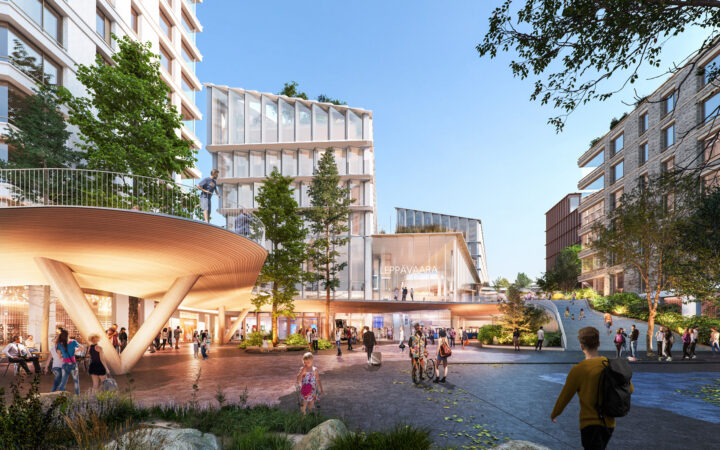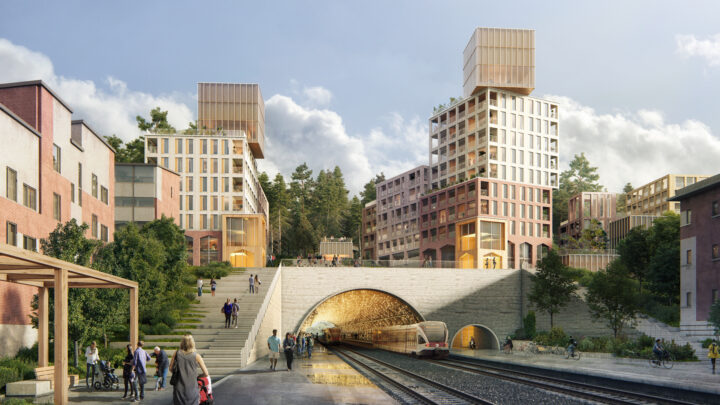
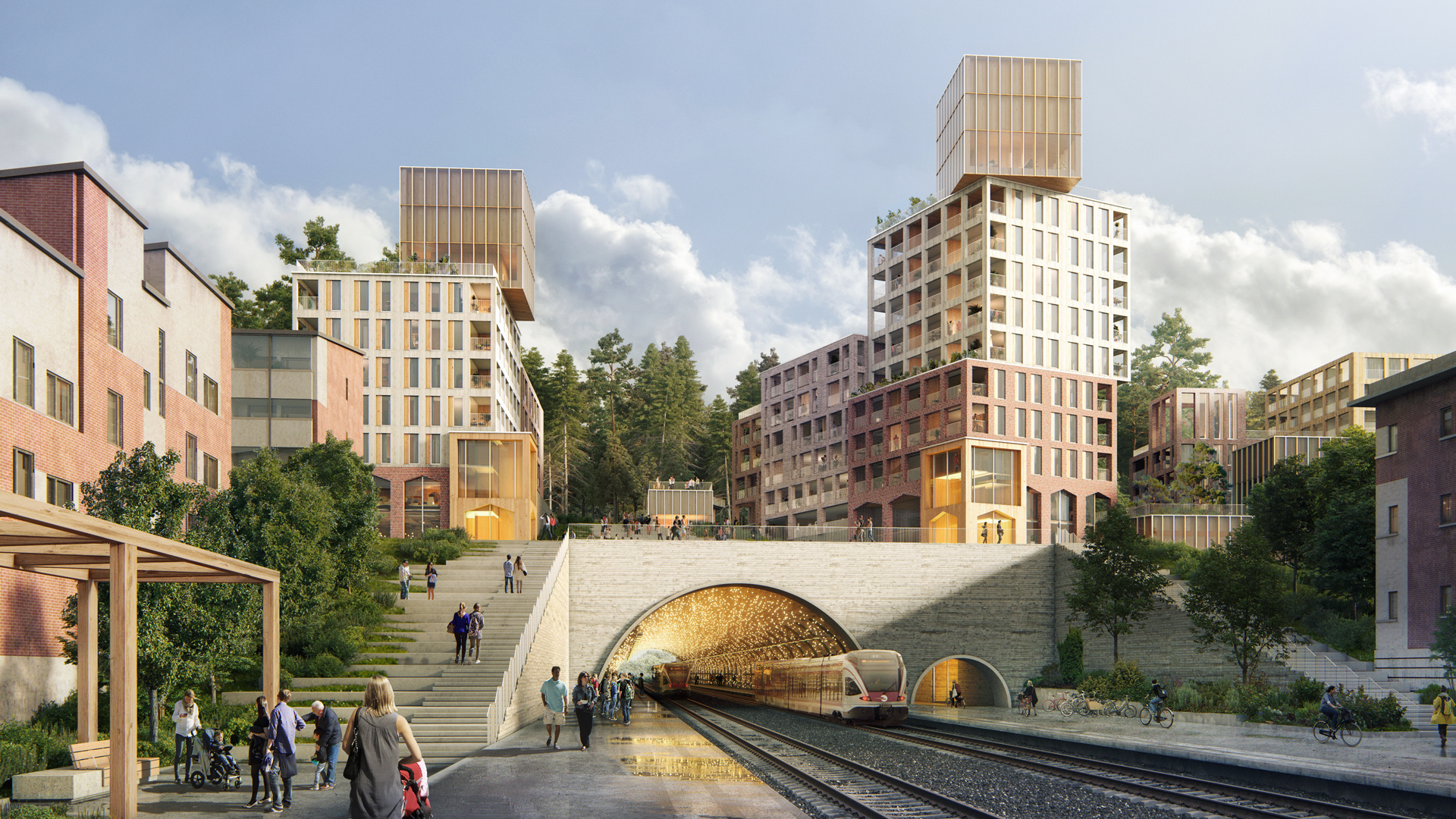
Latvus is a forward-looking interpretation of urban communal living, set in nature above a railway station.
ARCO won the design competition with a proposal based on five key principles:
1. The Kartanonmetsä forest is visible and ever-present
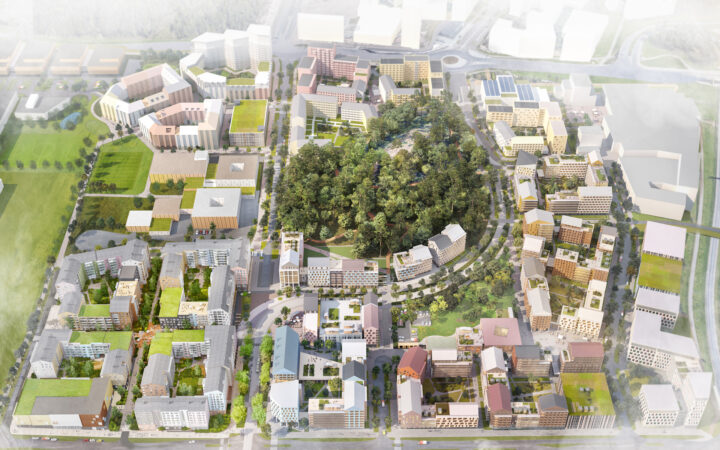
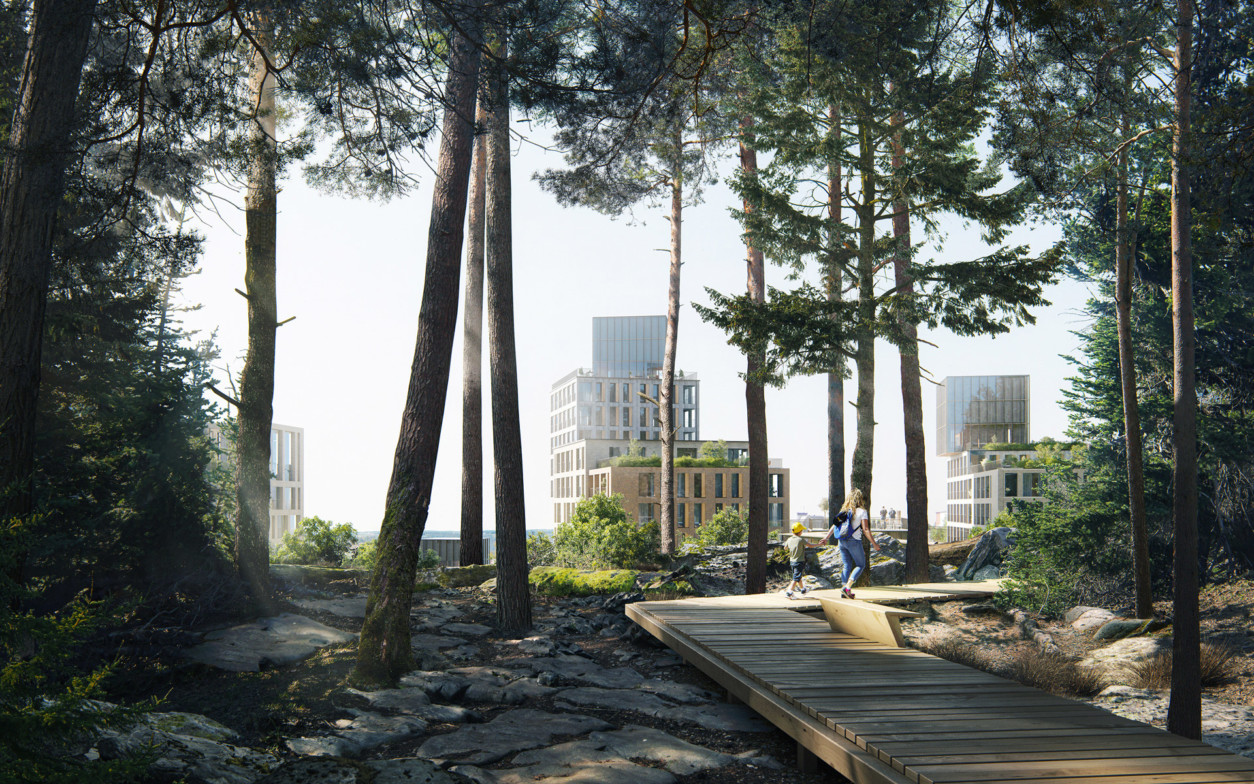
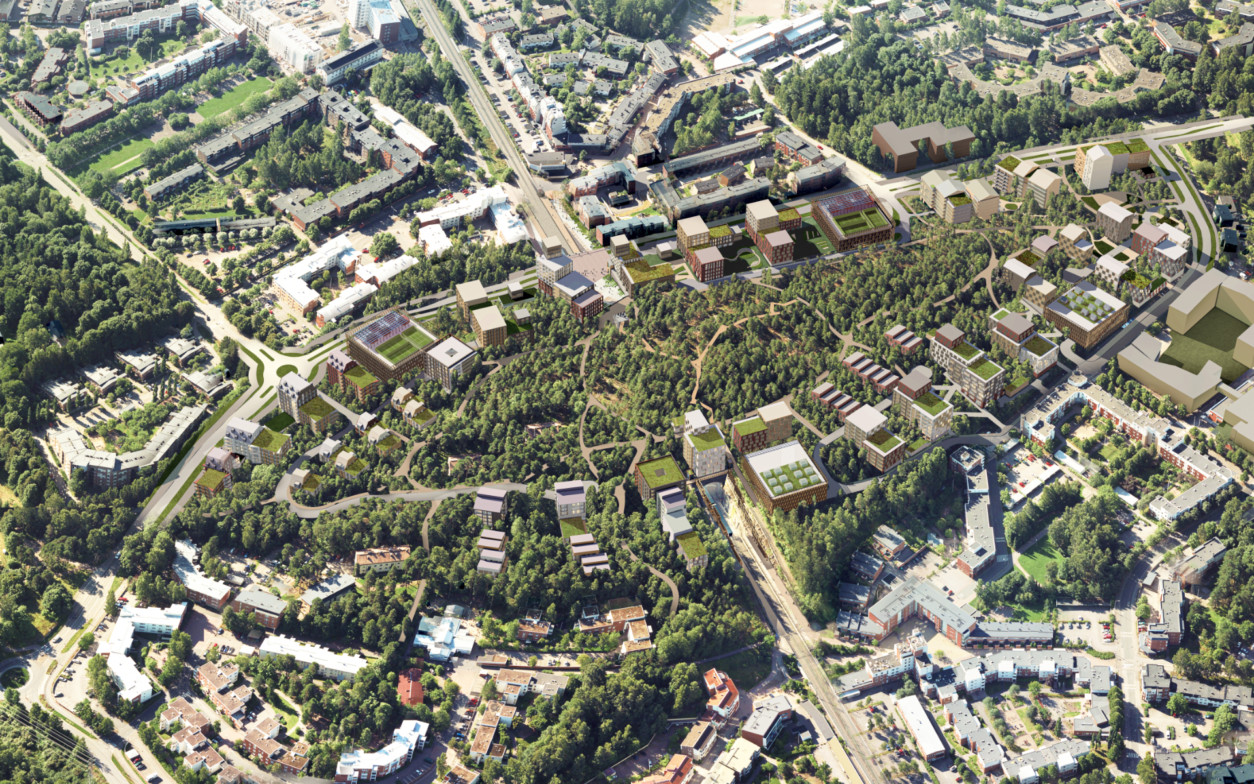
The forest is the beating heart of Malminkartano, woven into the urban fabric through both existing and future blocks. The massing and circulation have been carefully designed to maximise the visibility of the forest and enable diverse, accessible recreational use throughout the area. The aim is to preserve as much of the forest as possible in its natural state, including between the blocks, making it a symbiotic part of the urban environment.
2. Homes are connected to nature
Apartments open towards the forest and courtyards, which in turn connect directly to the surrounding landscape. Rooftop terraces and balconies rise into the tree canopy, offering expansive views. The placement of the buildings also respects views from neighbouring blocks towards the forest. The solution allows sunlight to reach the natural areas between buildings and further north into adjacent plots.
3. Preserving the spirit of Malminkartano
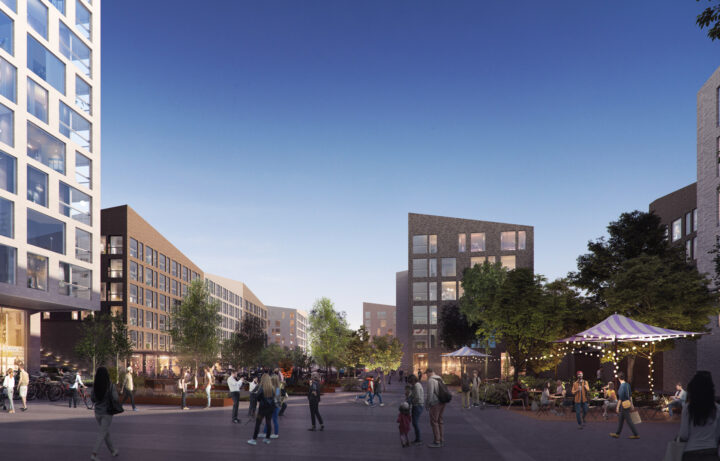
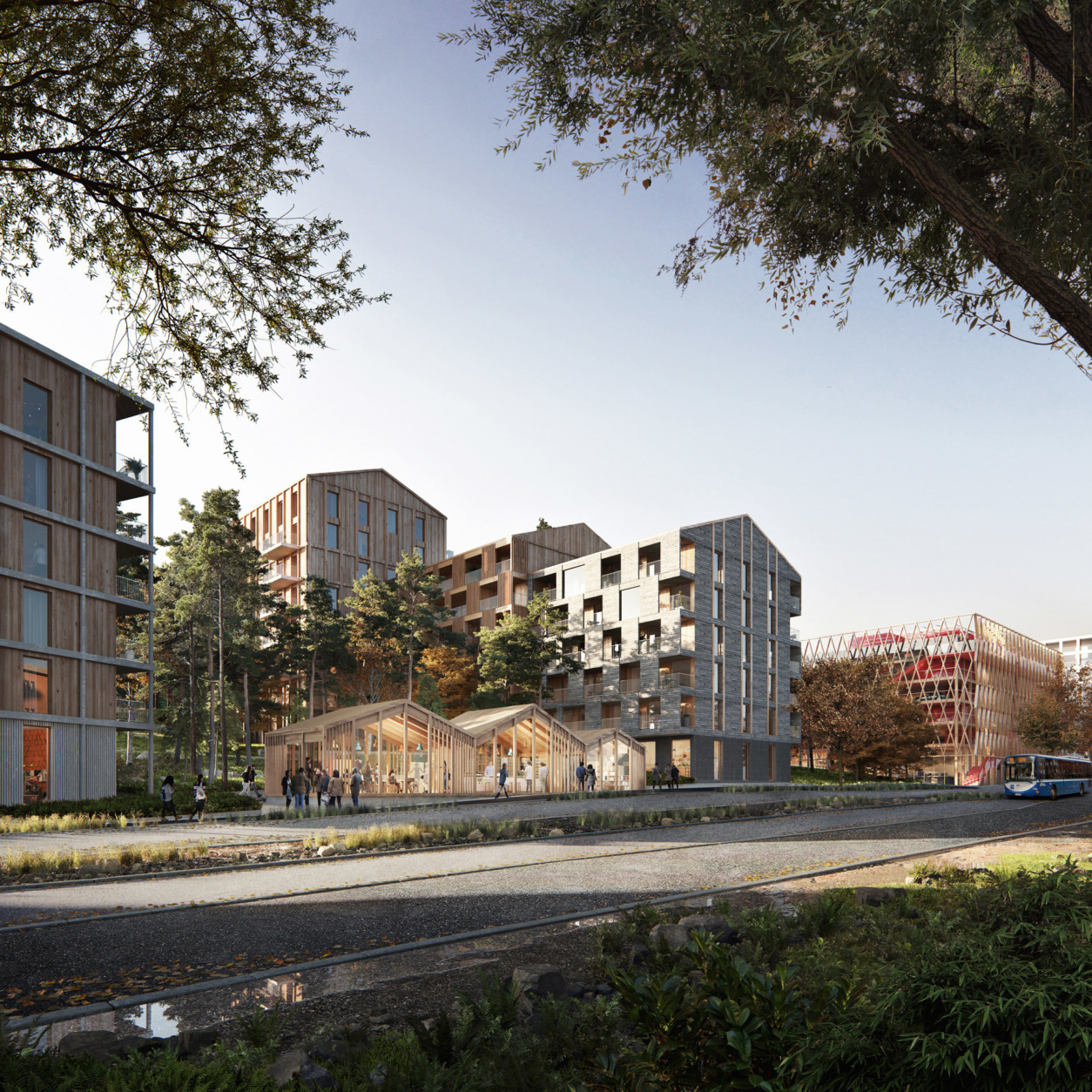
The architecture is varied, playful and experimental in its use of materials. The block structure, diverse roofscape and façade treatments reinterpret the original ambitions and scale of Malminkartano for the 2020s. Clearly defined street spaces and a massing that complements the existing building stock help to unify and complete the area’s diverse urban structure.
4. A new layer with a distinct identity
As a landmark on the hill, Latvus establishes a unique and inviting urban character. Variations in housing types, materials and roof forms create a dialogue between blocks. Together with the changing building heights, this results in a cohesive environment with gradually unfolding views. What unites all blocks is the interaction of nature, light and active ground-floor spaces.
5. Sustainable solutions
Special attention has been given to low-carbon strategies, making the most of the site’s location, orientation and construction methods, while also supporting social sustainability.